Imagine a paradise on Earth: a vast tropical garden filled with unique and stunning plants, home to thousands of animal species. Here, you’ll find traces of ancient civilizations—breathtaking ruins adorned with statues of Buddha. Be enchanted by the intricate decorations of Hindu and Buddhist temples and absorb the indescribable charm of a distant culture and belief system. Visit thousand-year-old cave temples or retreats once inhabited by monks devoting their lives to achieving blissful nirvana. Sip authentic, delicious Ceylon tea while chatting with friendly locals and gazing over tea plantations, rice fields, or mountain peaks. Taste exotic fruits and enjoy a ride on a gentle elephant. And when you’ve had your fill of adventure, simply stroll to a golden sandy beach and let the warm waves of the Indian Ocean wash over you. You can also calm your mind and body in one of the many Ayurveda centers, and indulge in a full-body massage rooted in centuries of natural healing tradition.
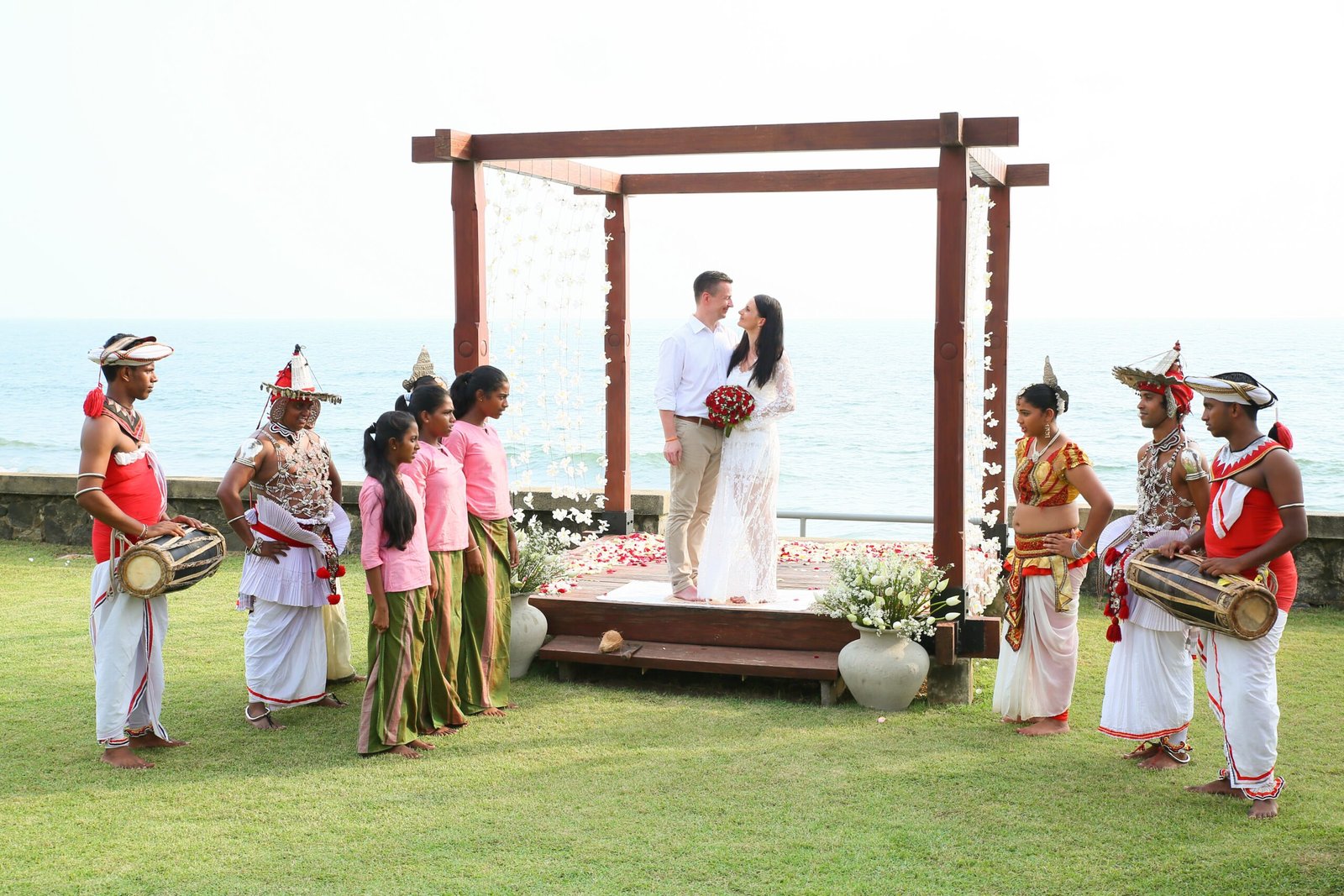
The traditional Poruwa wedding ceremony lasts approximately 45 minutes and takes place on a beautifully decorated wooden platform called the “Poruwa,” where Buddhist wedding rituals are performed. This event is therefore known as “Poruwa Siritha” (Poruwa Ceremony). It is believed that Poruwa Siritha existed in Sri Lanka even before the arrival of Buddhism in the 3rd century BC.
First, the bride and then the groom are escorted from their hotel to the wedding ceremony in a grand mini procession, accompanied by Kandyan dancers and drummers. The officiant invites the couple onto a specially decorated platform called the Poruwa by blowing into a conch shell. The couple not only exchange vows but also a bundle of betel leaves, which they pass to each other exactly seven times according to tradition—symbolizing their bond, unity, and love for the next seven generations.
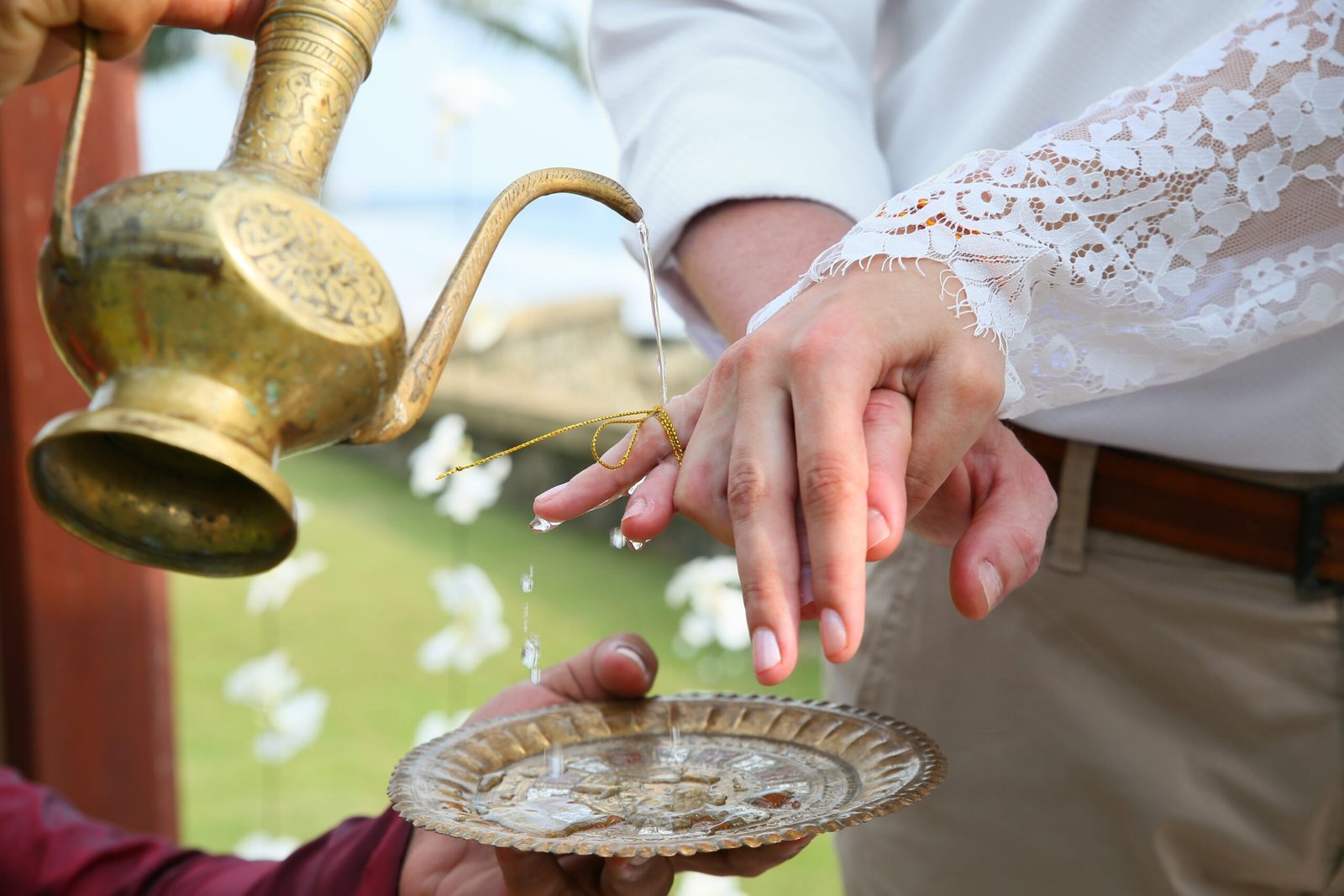
The ceremony continues with the couple’s pinky fingers being tied together with a gilded thread, followed by water being poured over their hands from a handcrafted Kandyan pitcher, symbolizing their eternal union. All of this takes place to the continuous sound of prayers.
After exchanging wedding rings, the couple feeds each other milk, rice, and water—an act that represents their promise to care for and protect one another throughout their married life. To celebrate the marriage, young girls dressed in traditional Sri Lankan sarees sing wedding songs.
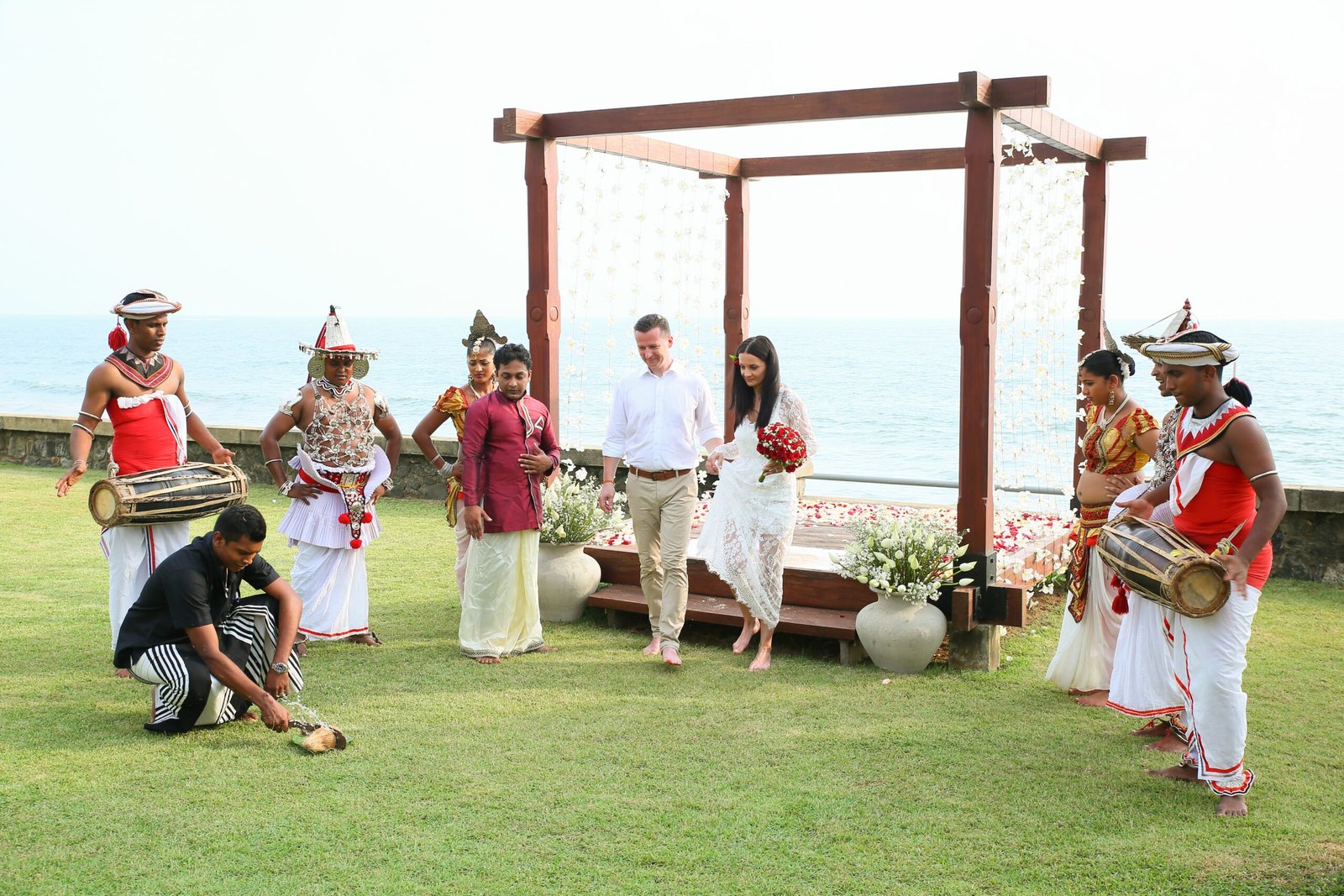
The newlyweds are then asked to descend from the ceremonial Poruwa to the sounds of singing and drumming. Only once they have stepped down is a coconut broken—symbolizing a blessing for future children.
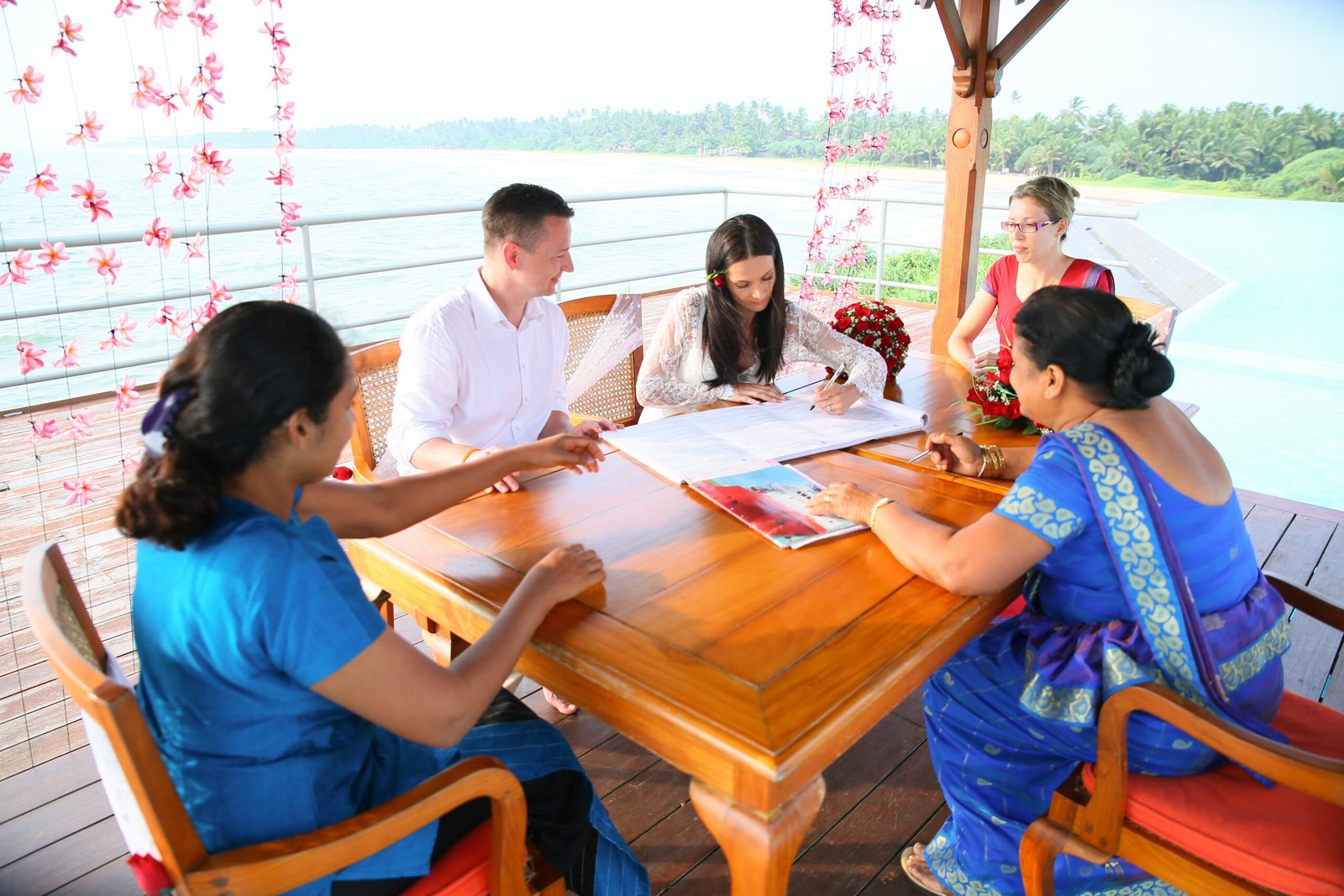
In Sri Lankan tradition, the lighting of an oil lamp represents the light of hope and success. The marriage certificate is signed by the bride and groom and their witnesses—one of whom must be a Sri Lankan citizen—in the presence of the officiant. If the couple wishes, they may conclude the ceremony with a ride along the beach on a beautifully adorned elephant.